
Designing ShiftSyncAI:
A structured diagnostic workflow for automotive service teams
Designing an automotive diagnostics platform to help technicians document faster, reduce advisor handoff friction, and create clearer customer-ready repair communication.
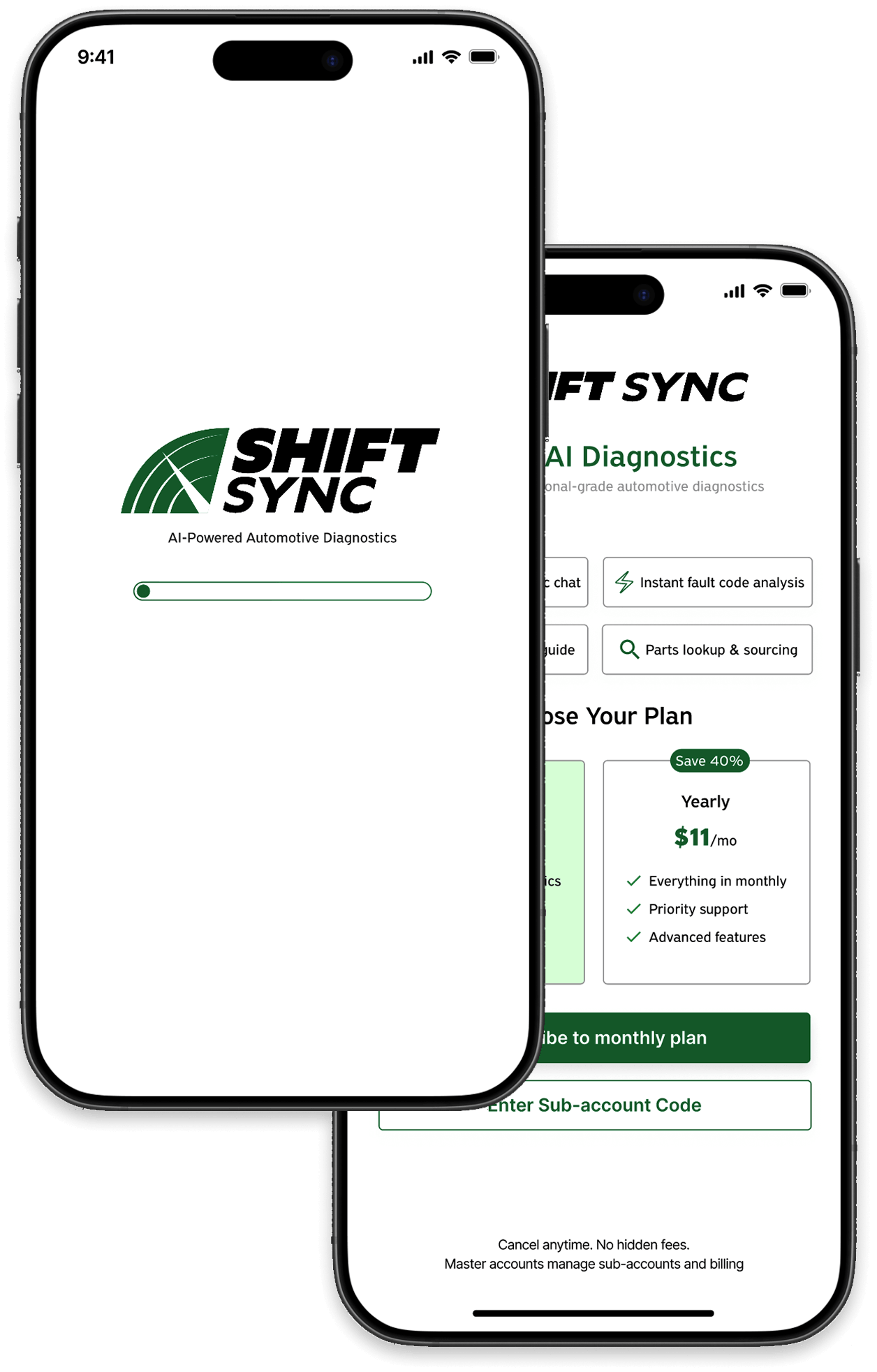
Automotive SaaS / Service Operations / AI-assisted workflow
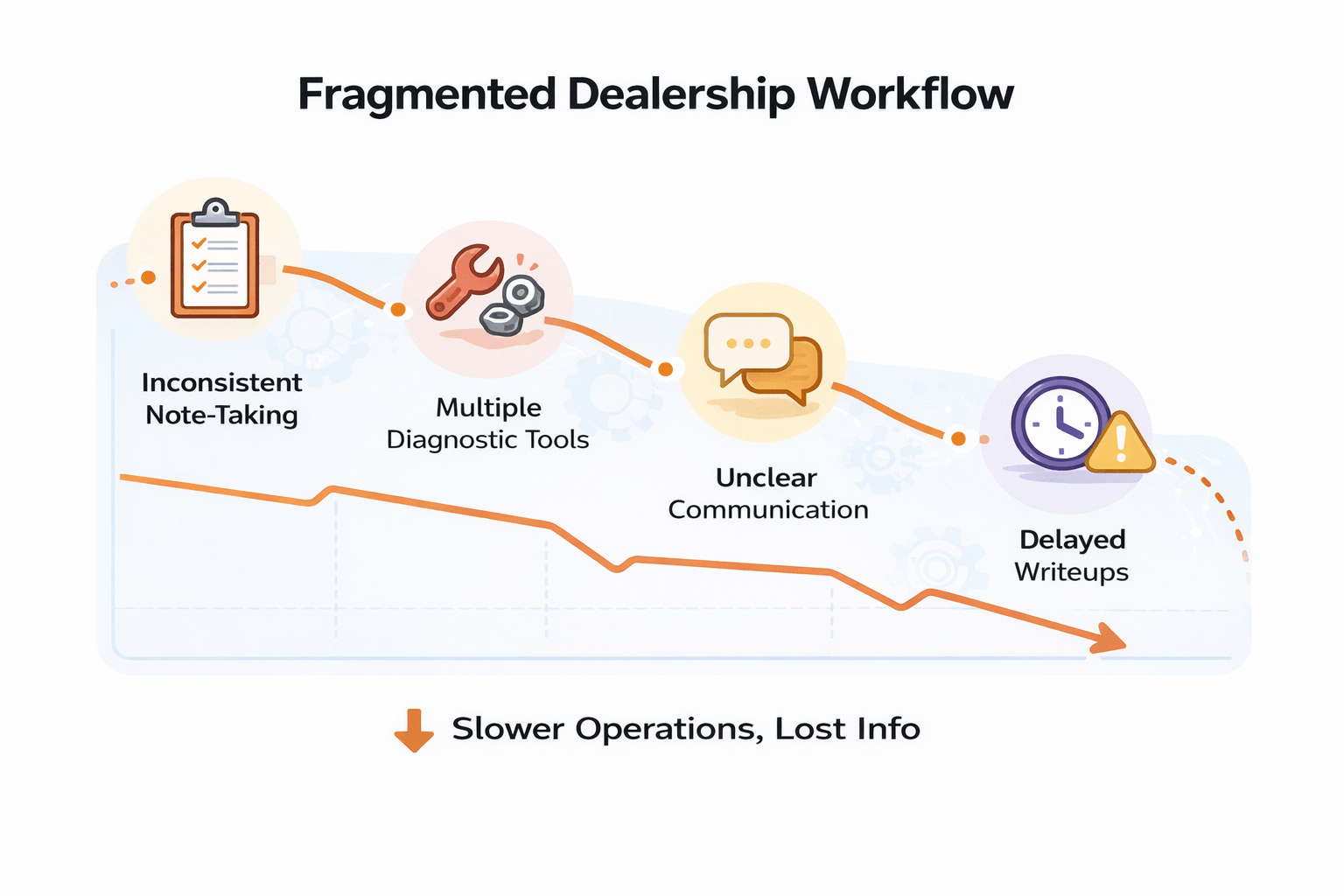
Technicians and advisors currently work across fragmented tools, inconsistent documentation habits, and broken communication loops. They often navigate 5+ disconnected tools per concern, spend 10–30 minutes searching before troubleshooting begins, and may lose 1–2 hours per diagnostic job due to inefficient, unstructured workflows. The aim is to build an app to bring diagnostic thinking, note capture, and advisor-ready summaries into one organized workflow.
8 Months
User research, product strategy, user flows, information architecture, wireframing, UI design, prototyping, usability testing
PowerPoint, Figma, Photoshop, Illustrator
Problem & Context
Dealership service departments don’t suffer from a lack of skill; they suffer from a lack of structure. Diagnostic information exists, but it’s scattered across OEM portals, service manuals, bulletin libraries, training notes, and personal experience, with no unified workflow connecting it all.
Technicians are forced to constantly switch between systems, take unstructured notes, and spend valuable time searching before they even begin diagnosing. As a result, advisors often receive unclear or incomplete updates, leading to back-and-forth communication that slows the entire process.
This results in lost time per job, inconsistent documentation, poor customer communication, and no reusable knowledge across the team.
who does it affect?
When diagnostic workflows lack structure, technicians, advisors, and managers all experience delays, miscommunication, and inconsistent documentation.
Why does it matter?
This matters because the cost is both operational and human: slower diagnostics, inconsistent writeups, weaker warranty documentation, and frustrating customer communication. ShiftSync is a response to these workflow inefficiencies through structured sessions, voice input, session history, and one-tap advisor summaries.
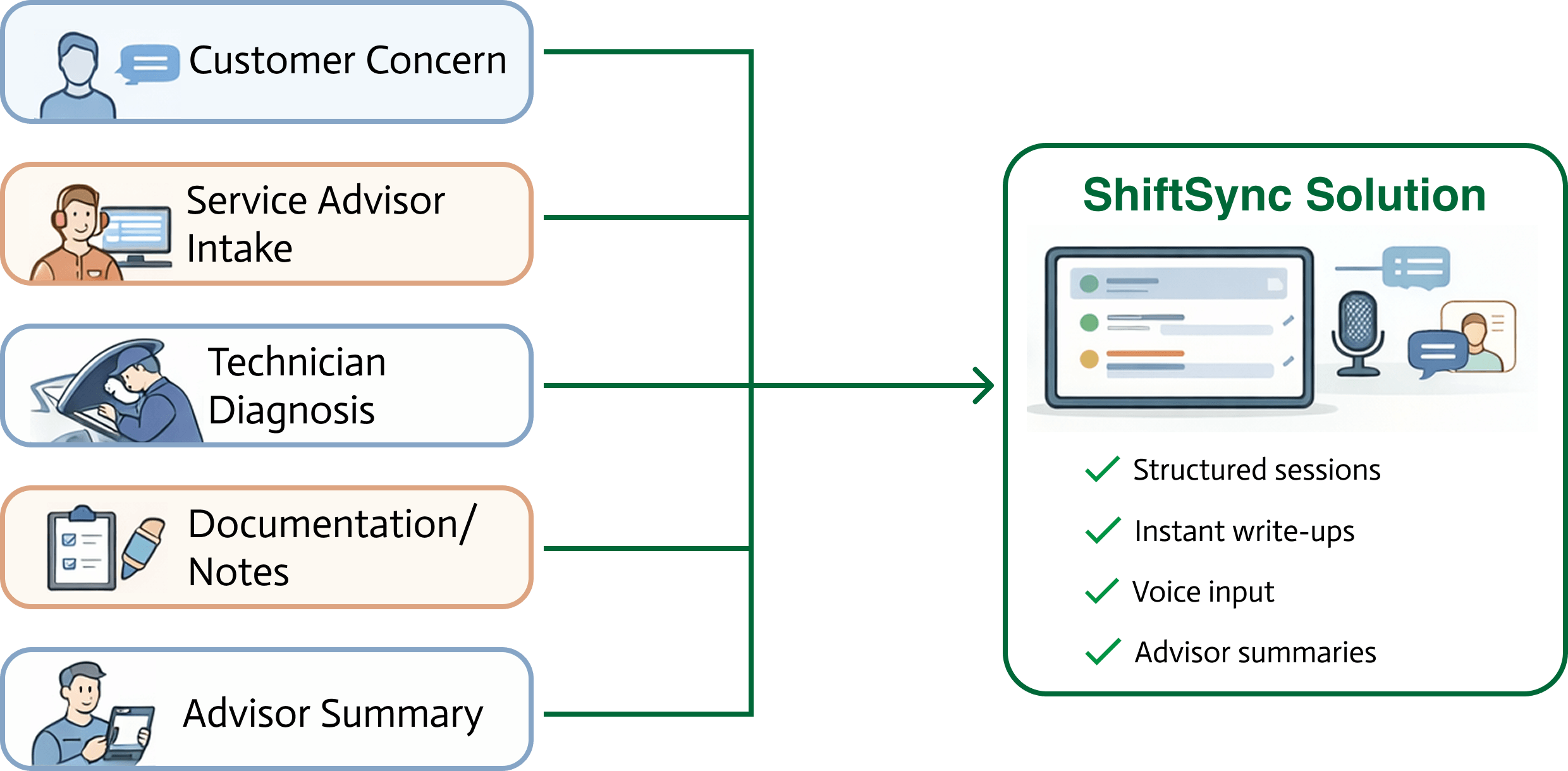
Determining business and user goals
What do they want to achieve with this product? What need does it fill?
ii. Reduce inefficiencies caused by fragmented tools and poor documentation.
iii. Increase perceived product value for pilot users by solving a high-friction service department problem.
iv.. Support better advisor communication and stronger documentation quality for shops and managers.
ii. Make note capture faster and more natural through text and voice.
iii. Help advisors receive clear, customer-facing summaries without repeated back-and-forth.
iv. Create a simple, searchable record of each diagnostic session.
Success Metrics
These metrics are framed as target outcomes for ShiftSyncAI until the full release of the product.

Reduce pre-diagnostic search/setup time by 25–40%.
Reduce documentation effort at end of job by 30%.
Reduce advisor follow-up interruptions per job.
Increase completion rate of diagnostic session documentation.
Improve ease-of-use and clarity scores in usability testing.
Reduce steps required to generate a technician-to-advisor handoff summary.
Target Market Research

Age: 20 - 40
Gender: Majority male, increasing diversity in the trade
Education: Trade school, apprenticeship, or automotive certification
Occupation: Automotive Technician / Diagnostic Technician
Annual Income: $45,000 – $85,000+

1. Focused on diagnosing vehicles quickly and accurately
2. Prefers tools that reduce paperwork and manual documentation
3. Often frustrated by switching between diagnostic tools, notes, and shop systems
4. Values efficiency and clear communication with service advisors
5. Comfortable using digital tools if they make their job faster
6. Wants documentation to reflect the real diagnostic process without extra effort

North America (Canada / United States). Primarily urban and suburban automotive repair shops.
Age: 30 - 55
Gender: Mixed
Education: Management training, business diploma, or industry experience
Occupation: Service Advisor / Service Manager / Shop Owner
Annual Income: $60,000 – $120,000+
1. Translating technician diagnostics into customer-friendly explanations
2. Values accurate documentation for warranty claims and repair approvals
3. Needs quick access to technician notes and diagnostic updates
4. Focused on improving shop efficiency and customer satisfaction
5. Wants consistent diagnostic processes across technicians
6. Seeks tools that improve communication between the shop floor and front desk
North America (Canada / United States). Independent repair shops and dealership service departments.
Key Insights

Too many tools = broken thinking
The biggest problem was not access alone, but the cognitive overhead of connecting multiple tools, notes, and conversations into one usable workflow.

Documentation happens too late
When note-taking happens after the diagnostic process, details get lost, summaries get weaker, and advisors receive incomplete information.

Handoff is the biggest failure point
Advisors need structured, customer-ready summaries rather than technical shorthand meaning simpler language for customer communication is a must.

The environment is messy
Users need to use the product across laptops, desktops, and phones, including voice input during road tests. This means the workflow must work in noisy, mobile, interrupted environments, not just at a desk.
User Persona / Target User
Understanding the technicians and service advisors whose daily workflows shape the diagnostic and documentation process.
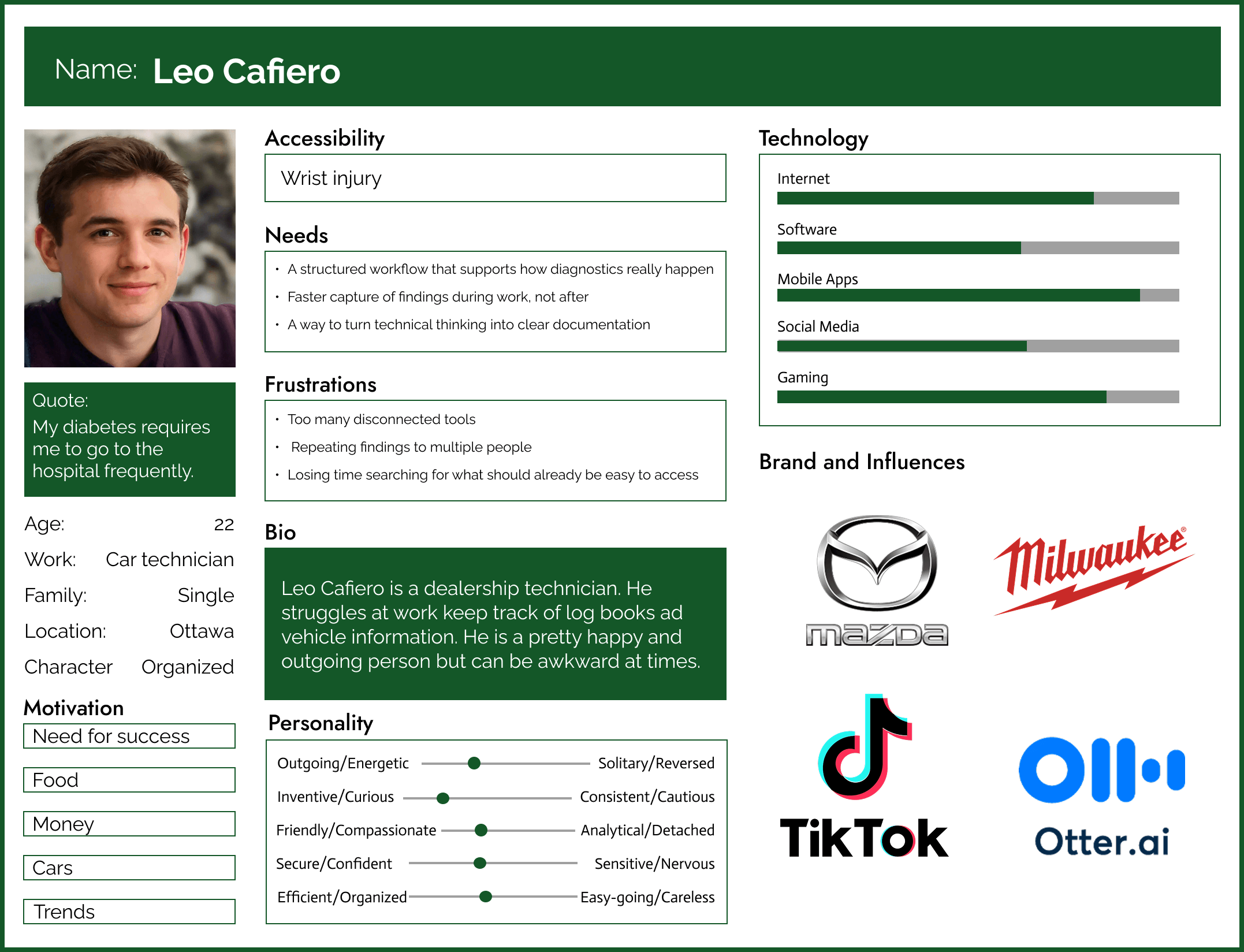
Identifying the problem
Technicians and service advisors need a faster, more structured way to capture, organize, and communicate diagnostic work because current dealership workflows rely on fragmented tools, inconsistent note-taking, and inefficient handoffs that slow down service operations and reduce clarity. To avoid any of these issues dealerships need a workflow that helps document and organize diagnostic work on the go, so time and important information isn't lost.
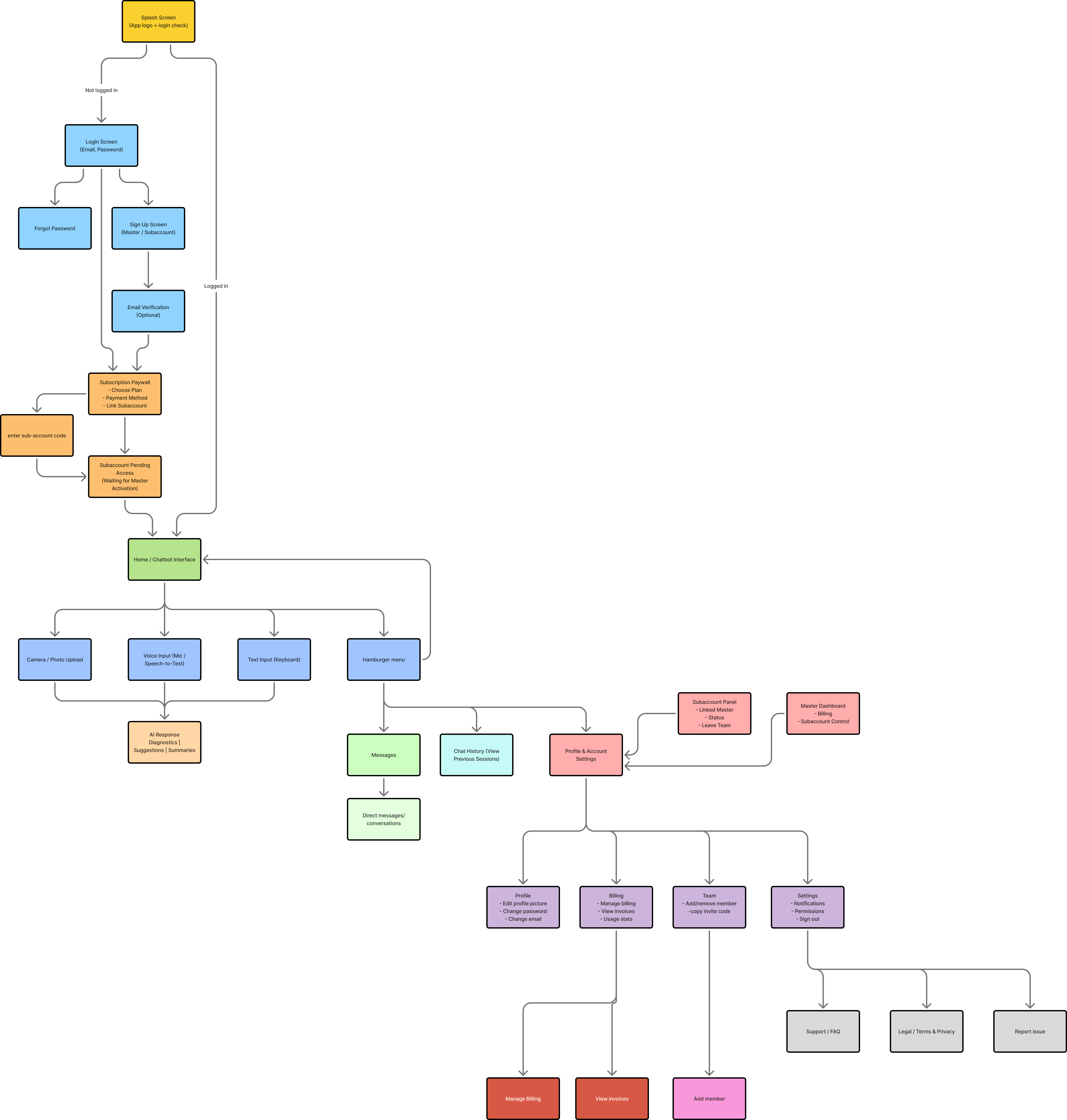
Key App Features
• Structured Diagnostic Sessions: Keeps everything tied to one concern
→ eliminates scattered workflows
• Voice-First Input: Capture notes during real work
→ No interruption
• One-Tap Advisor Summary: Transforms technical notes into clear communication
→ Reduces back-and-forth
• Searchable History: Stores past jobs by vehicle, issue, or code
→ Builds long-term knowledge
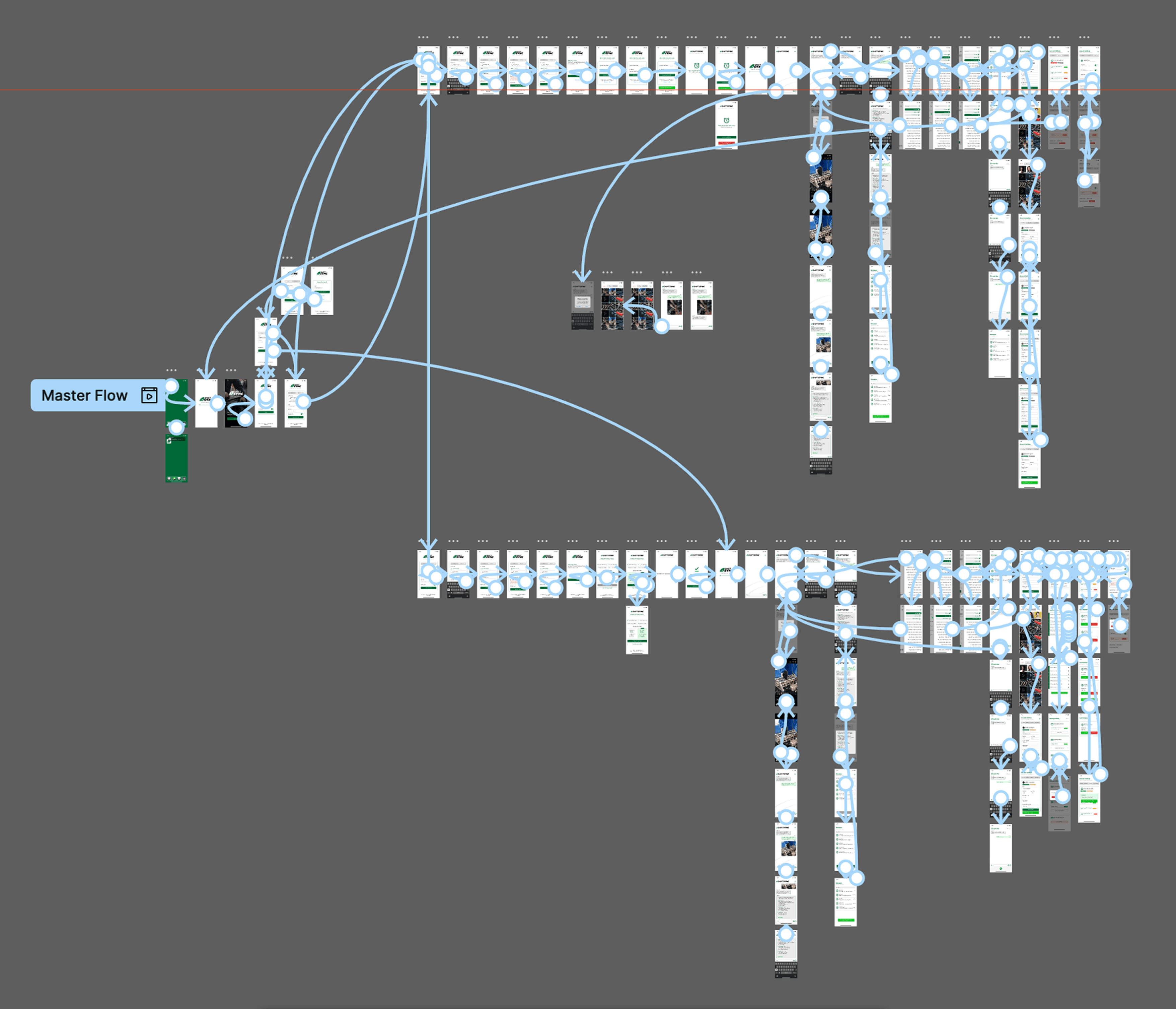
ShiftSyncAI App Flow
A visual map of the app experience, illustrating how each screen connects within the ShiftSyncAI workflow.
Final Outcome
This project explored the design process behind ShiftSync and how it improves the workflow of automotive service teams. After identifying challenges technicians face with documenting diagnostics, tracking repairs, and communicating with service advisors, I designed the platform around clarity, speed, and structured workflows. The final solution prioritizes clear information hierarchy, guided diagnostic steps, and simplified documentation, helping technicians move more efficiently from identifying issues to completing repair orders while improving communication and overall workflow efficiency.
Reflection & What I Learned
This project helped me understand how important it is to design digital tools around real-world workflows. While working on the ShiftSync app design, I learned that technicians operate in fast-paced environments where interfaces must prioritize clarity, speed, and minimal friction. Focusing on information hierarchy and structured workflows made it easier to guide users through the diagnostic process instead of forcing them to search for information. This experience also reinforced the importance of balancing user needs with business goals, and if I continued the project, I would validate the design through user testing with technicians to further refine the workflow and usability.